

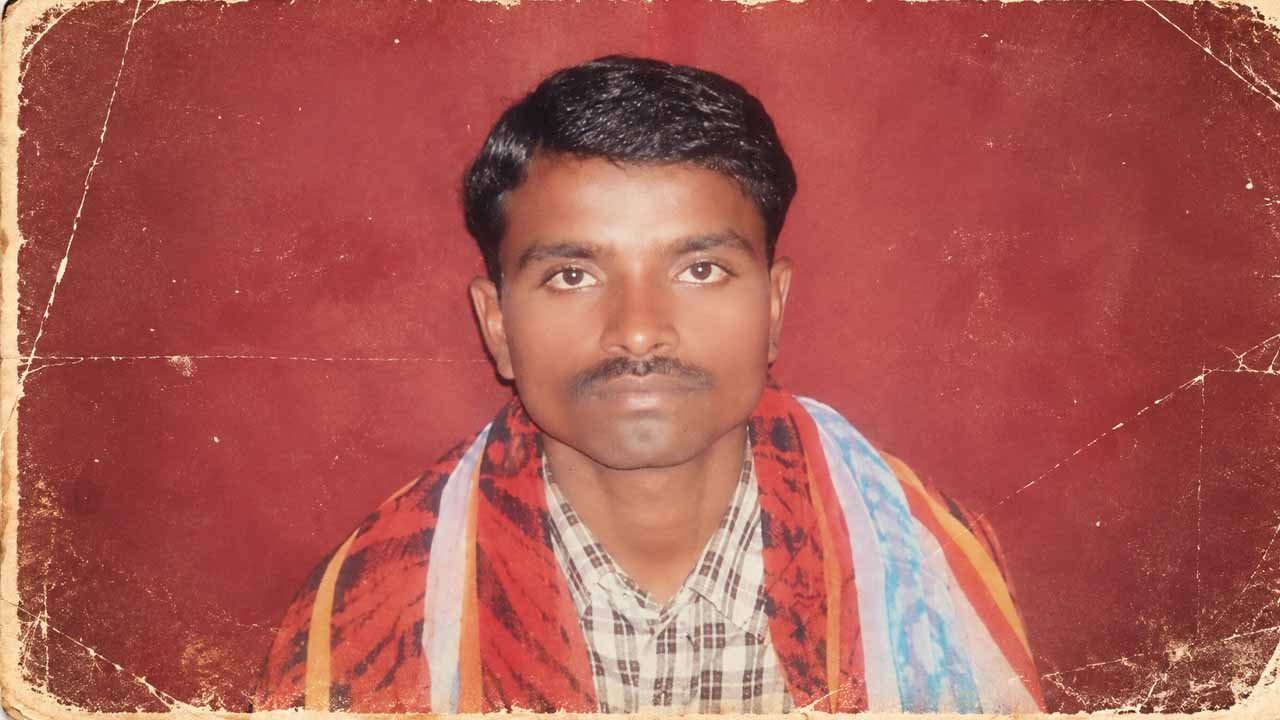
As soon as the news of devastating floods hit the northern part of Nepal and hundreds of persons including a few Bihari migrant workers went missing in the disaster, flashed on social media, my mind traveled five years back.
It was the winter of 2021.
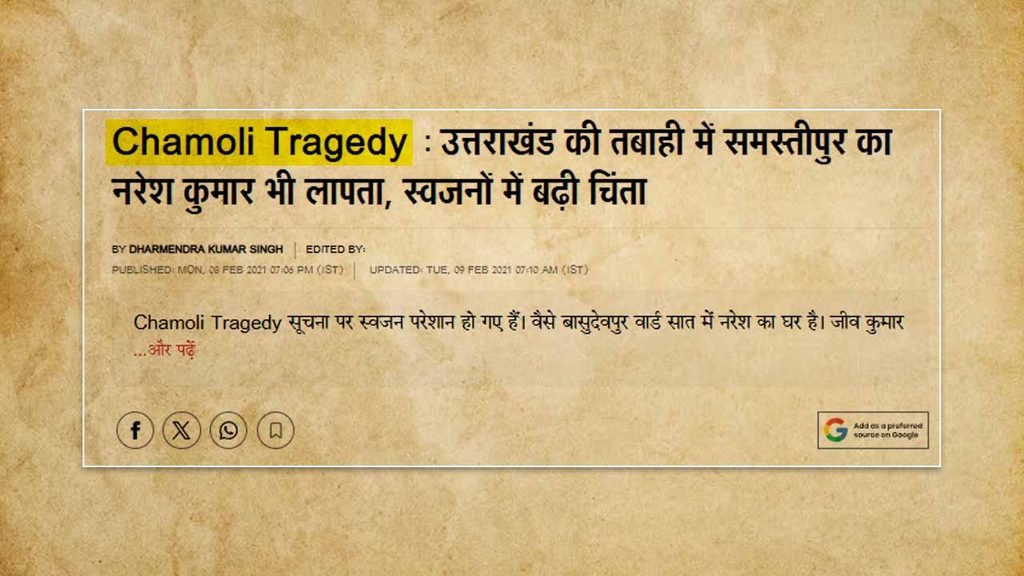
In February that year, a devastating flood, had occurred in the environs of Nanda Devi national park in the outer Garhwal Himalayas in Chamoli district of Uttarakhand. About 205 people were reported missing by the Uttarakhand administration and nine of them were migrants from six districts of Bihar.
I had tracked a few workers’ families and did a story about how the death of the migrant workers was affecting their families. They all were marked missing when I filed the story. Some of the families had performed last rites of their members making effigies of straw as representative of dead bodies.
A few months later I again contacted them to know if they received compensation or not. All the families informed me that they received money from the Uttarakhand government. But, the family of Samastipur resident Naresh Das had not received a penny. Why? Because the company where he was working had not found Das’s presence at the site during the disaster. However, the missing persons’ list issued by the Uttarakhand Administration had his name.
Naresh was married and had a wife and two children.
In curiosity, I decided to follow the case.
*****
It was the onset of monsoon in 2021. Villages and small towns are exceptionally lush and green at this time.
Being a small town scribe, most of the time I travel by public bus or local train for my reporting unless I am paid for travel. So, I took a morning bus from Patna to Samastipur town. The color of the bus was fading and marks on it was proof that it had met with multiple small incidents. As the bus left for Samastipur, khalasi switched on the 14 inch colour television. A 90s Hindi movie was on play.
It took three hours to reach Samastiour bus stand. From there I took an auto to Basudevpur village. The auto dropped me at a chowk.
From there I walked on a kharanja (brick road) which ended after 500 metres of walk. Then I followed a mud road which was actually an aari or boundary of two agricultural fields.
About 200 metres walk and I was in front of a dilapidated house – old and unplastered.
Right across from the house stood a hut where Naresh’s family members asked me to sit. For a few minutes, I sat there wondering how to break the ice with his octogenarian father Jeev Kumar Das who had lost his elder son. Just then, he arrived.
He was frail and short of stature. Leaning on a walking stick, he sat on a wood chair facing me. I was sitting on a chowki. He was suffering from tuberculosis and coughed intermittently throughout our conversation.
The father spoke in a detached manner as if he didn’t care about anything. He mentioned that he had not been in touch with Naresh because the latter was wayward and did not send money home. He then spoke about how no government officials have contacted him for compensation or whereabouts of Naresh.
*****
Naresh was a primary school drop out and Jeev Kumar Das told me that the reason was that he didn’t like to study.
One astonishing feature of Naresh was that he would not keep a mobile phone from the beginning. No one knew the reason behind this.
However he would keep the mobile number of his family members with him written in a pocket diary. Whenever he needed to speak with his family, he would call from a Public Call Office (PCO) or from the mobile of his colleague.
He would work as a laborer in Ludhiana, but a year prior to the floods, he had started working in Uttarakhand.
About a month before the tragedy, Naresh had called home from a PCO.
Naresh’s brother, Rajesh Das, told me that the company was continuously claiming Naresh was not in Uttarakhand on the day of the incident.
Rajesh kept insisting that they deserved compensation, yet neither state government was taking any initiative in the matter.
After talking for about an hour, I left for Patna thinking what went wrong in Naresh’s case. I hadn’t even reached the main road when I received a call from Rajesh. “Sir, humlogon ko pata chala hai ki woh zinda hain [Sir, we’ve received news that he is alive],” Rajesh told me. “Someone from his in-laws’ village has seen him alive.”
I obtained the number of the person who had found Naresh. When I called him, he explained that he had spotted Naresh by chance in Delhi while on his way to work. He took Naresh to his own home and subsequently helped him reach his in-laws’ place, where his wife and two children were living since Naresh was declared missing.
When asked how he had made it to Delhi from Uttarakhand, Naresh
explained that he had arrived in Delhi from Uttarakhand just 15 to 20 days before the incident. Since then he had been wandering around the city.
Actually, Naresh was moody, which is why he used to wander aimlessly; it was this very wandering that had led him to flee Uttarakhand.
It was this same wandering that ultimately saved his life.
Responses